What Makes the XPENG electric suv G6 Stand Out from Other Electric SUVs?
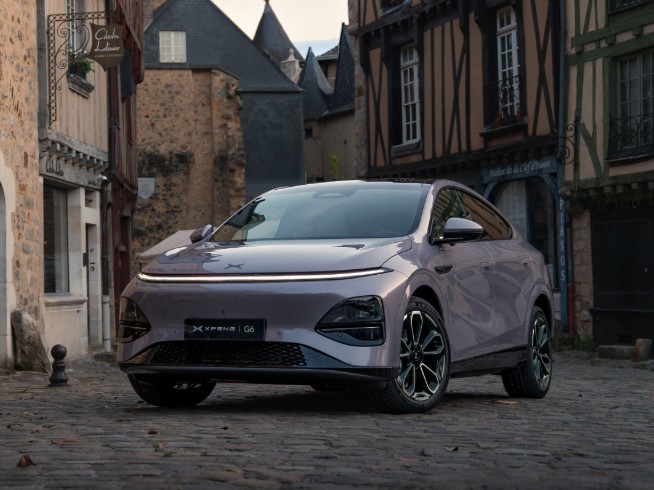
The XPENG G6 stands apart from many midsize electric SUVs through charging speed, battery chemistry, range, cabin packaging, and safety performance. Its latest 800V electrical system supports up to 451 kW DC charging, taking the battery from 10% to 80% in about 12 minutes under suitable conditions. The Long Range version uses an 80.8 kWh LFP battery and reaches up to 535 km WLTP with 18-inch wheels, while the Performance model reaches 100 km/h in 4.1 seconds. Euro NCAP awarded the G6 five stars in 2024, with 88% adult-occupant and 85% child-occupant scores.
Charging performance explains much of the difference between the G6 and conventional 400V electric SUVs. The current G6 uses a full-domain 800V electrical architecture and a 5C LFP battery, with peak DC input rising from the previous 215–280 kW range to as much as 451 kW. XPENG reports a 10–80% session of about 12 minutes when battery temperature, charger capacity, and state of charge are suitable.
A 70% battery refill in 12 minutes changes how motorway charging can fit into normal travel. An 80.8 kWh pack receiving 70% of its usable capacity adds roughly 56.6 kWh during that charging window, although actual power is not constant throughout the session. The 5C designation describes a battery designed to accept charging at a rate several times its nominal capacity, while thermal management regulates temperature as charging current rises.
Peak charging power should not be read as an average charging rate. A 451 kW figure describes the highest available point on the charging curve; charger output, battery temperature, state of charge, and software limits determine the rate available at any specific moment.
Battery chemistry adds another point of separation. The 2025-generation G6 changed to LFP packs: 68.5 kWh for Standard Range and 80.8 kWh for Long Range and Performance versions, replacing earlier 66 kWh and 87.5 kWh packs. LFP chemistry avoids nickel and cobalt used in many nickel-rich lithium-ion packs and is widely used where thermal stability and repeated charging cycles matter.
That chemistry would matter less if range fell sharply, yet the Long Range model is rated at up to 535 km WLTP with the appropriate 18-inch wheel specification. Depending on market specification, published figures can vary; a 2026 European brochure lists 525 km for Long Range, 510 km for Performance, and 470 km for Standard Range. The same brochure reports combined WLTP energy use of 17.9, 18.4, and 16.9 kWh/100 km respectively.
| Specification | Standard Range | Long Range | Performance |
|---|---|---|---|
| Battery | 68.5 kWh | 80.8 kWh | 80.8 kWh |
| WLTP range* | 470 km | 525 km | 510 km |
| WLTP consumption* | 16.9 kWh/100 km | 17.9 kWh/100 km | 18.4 kWh/100 km |
| Peak DC charging | 382 kW | 451 kW | 451 kW |
| 0–100 km/h | 6.9 sec | 6.7 sec | 4.1 sec |
*Figures shown in XPENG's 2026 European brochure; range can differ with wheel specification and market certification.
Efficiency also comes from body shape rather than battery capacity alone. The G6 has a low-profile crossover form and has been published with a drag coefficient around 0.248, helping limit aerodynamic resistance at motorway speed. Aerodynamic losses rise rapidly as speed increases, so body efficiency becomes increasingly relevant during 110–130 km/h travel, where an EV spends much of its energy pushing air aside.
Physical dimensions show how XPENG has used the platform. The G6 is 4,758 mm long, 1,920 mm wide, and 1,650 mm high, with a 2,890 mm wheelbase. A 2026 European specification lists 571 litres of luggage capacity with the rear seats upright and 1,374 litres after folding them, plus a 75 kg roof-load rating.
That 2,890 mm wheelbase occupies about 60.7% of the vehicle's overall length, giving the passenger compartment a relatively long footprint for a 4.76-metre SUV. With no combustion engine occupying a large front engine bay, floor and seating geometry can be arranged around the battery and electric hardware. Five seats are standard, while the broad 1,920 mm body gives more lateral cabin space than narrower compact crossovers.
Practical use extends beyond passengers. Current European data lists a braked towing capacity of 1,500 kg and an unbraked rating of 750 kg, while maximum payload is around 450–475 kg depending on version. Those numbers put the G6 closer to conventional family-SUV use than EVs designed mainly around urban commuting.
Performance follows a similar spread. The Standard Range version produces about 252 hp in the cited European specification, Long Range rises to 297 hp, and Performance reaches 487 hp with 660 Nm of torque. Top speed is listed at 202 km/h for all three, while the Performance version cuts the 0–100 km/h time to 4.1 seconds, compared with 6.7 seconds for Long Range.
The chassis is designed around a double-wishbone front suspension and multi-link rear arrangement. Compared with simpler strut-based front layouts, a double-wishbone design gives engineers more control over wheel geometry as the suspension moves. That matters on a vehicle weighing roughly 2,065–2,240 kg, because tyre contact and body movement become more difficult to manage as vehicle mass increases.
Inside, the packaging follows the screen-heavy layout now common in modern EVs without removing the main information display. XPENG lists a 10.25-inch instrument screen and a 15.6-inch central infotainment display. The difference is less about screen size than integration: charging status, navigation, climate settings, parking functions, and assistance systems can be handled through the same software environment.
The assistance package includes adaptive cruise control, lane centering, traffic-sign recognition, forward-collision warning, automatic emergency braking, rear cross-traffic alert, 360-degree parking cameras, and driver-state monitoring on current European versions. Some Long Range and Performance configurations also list an NVIDIA Orin computing platform and automatic lane-change assistance, although equipment varies by country and trim.
Independent crash testing provides a more useful reference than an equipment list. Euro NCAP tested the G6 in 2024 and awarded five stars, with 88% for adult occupants, 85% for child occupants, 81% for vulnerable road users, and 75% for safety assistance. The tested Long Range vehicle had a kerb weight of 2,025 kg, giving the assessment a defined vehicle configuration rather than relying on manufacturer simulations.
Euro NCAP reported that the passenger compartment remained stable in the frontal-offset test. Protection in the side-barrier and pole tests received maximum points for the assessed body areas, although rear-passenger chest protection in the full-width rigid-barrier test was rated weak.
The rating has also remained relevant after the original test. Euro NCAP published the result on September 11, 2024, completed a facelift review in September 2025, and recorded another facelift review in June 2026. The rating applies to listed RWD and AWD G6 variants, rather than only one isolated launch specification.
Charging at home gives a different picture from public DC use. Current European specifications list 11 kW AC charging, so the 451 kW figure matters mainly on suitable high-power public chargers. For an owner who charges overnight, AC speed and battery capacity matter more during the week; on long journeys, the 12-minute 10–80% claim becomes far more relevant.
Vehicle-to-load adds another practical use for the battery. V2L is listed on current G6 specifications, allowing compatible external electrical devices to draw energy from the vehicle. Camping equipment, laptops, lighting, or small appliances can therefore use part of the traction battery's stored energy, although available output and connectors vary by market.
For shoppers comparing a XPENG electric suv with other midsize EVs, the numbers work best as a group rather than in isolation: 800V architecture, up to 451 kW DC charging, 12-minute 10–80% charging, an 80.8 kWh Long Range battery, up to 535 km WLTP under the applicable wheel specification, 571 litres of luggage room, and a five-star 2024 Euro NCAP result.
Market conditions still affect how much of that specification an owner can use. A 150 kW public charger cannot supply 451 kW, cold battery temperatures can reduce charging speed, larger 20-inch wheels can reduce certified range, and sustained motorway speeds usually consume more energy than a mixed WLTP cycle. A buyer comparing two EVs should therefore look at battery capacity, consumption, charging curve, local charger availability, wheel size, and cabin space together rather than using one advertised number.
The G6's 2026 specifications also show the trade-off between performance and efficiency in measurable terms. Performance uses the same 80.8 kWh battery as Long Range but is listed at 18.4 kWh/100 km instead of 17.9 kWh/100 km, while rated range falls from 525 km to 510 km in the cited European brochure. In return, output rises to 487 hp and the 0–100 km/h time falls from 6.7 to 4.1 seconds.
Standard Range approaches the same equation differently. Its 68.5 kWh battery is 15.2% smaller than the 80.8 kWh unit, yet its listed 16.9 kWh/100 km consumption is about 5.6% lower than Long Range consumption. The published 470 km WLTP figure is therefore not proportional to battery size alone; vehicle mass, wheel specification, electrical efficiency, and certification conditions also contribute.
For daily use, those relationships matter more than specification-sheet rankings. A person travelling 60 km per day at 17.9 kWh/100 km would use about 10.7 kWh, roughly 13% of an 80.8 kWh battery before charging losses are considered. At that distance, several commuting days can fit within one normal charging cycle, while public fast charging remains available for longer trips.
Long-distance use puts the emphasis elsewhere. Moving from 10% to 80% gives access to about 56.6 kWh from an 80.8 kWh pack; at the official 17.9 kWh/100 km consumption figure, that energy corresponds mathematically to roughly 316 km before real-world adjustments. Temperature, rain, elevation, heating, tyre pressure, and 120–130 km/h motorway use can all reduce that figure, so trip planning should use recent vehicle consumption rather than the laboratory rating alone.